
I recently caught myself thinking about organisational learning in a new way.
For years, I defaulted to the idea of learning as a portfolio: courses, programmes, academies, curricula neatly arranged in a catalogue. Well-intentioned. Well-designed.
Then, an idea jumped into my mind, inspired by nature: learning as a living ecosystem.
Learning as a living system
In a well-functioning natural ecosystem, nothing exists in isolation. Plants, animals, fungi, microorganisms – each plays a role, but more importantly, each is in relationship with the others. Nutrients flow. Signals travel. The system adapts continuously to changes in climate, threat, and opportunity. Everything is interconnected.
I’d imagine learning in organisations to work best in the same way.
In a healthy learning ecosystem:
- Knowledge flows between teams, not just down from “experts”
- Feedback travels quickly, shaping behaviour and decisions in real time
- Data, insight, and experience are shared and recombined
- The system adapts to external pressures – new technologies like AI, shifting skill demands, changing markets
- Learning is continuous and regenerative, not campaign-based or episodic
This is less about delivering learning and more about creating the conditions in which learning can thrive.

The hidden networks beneath the surface
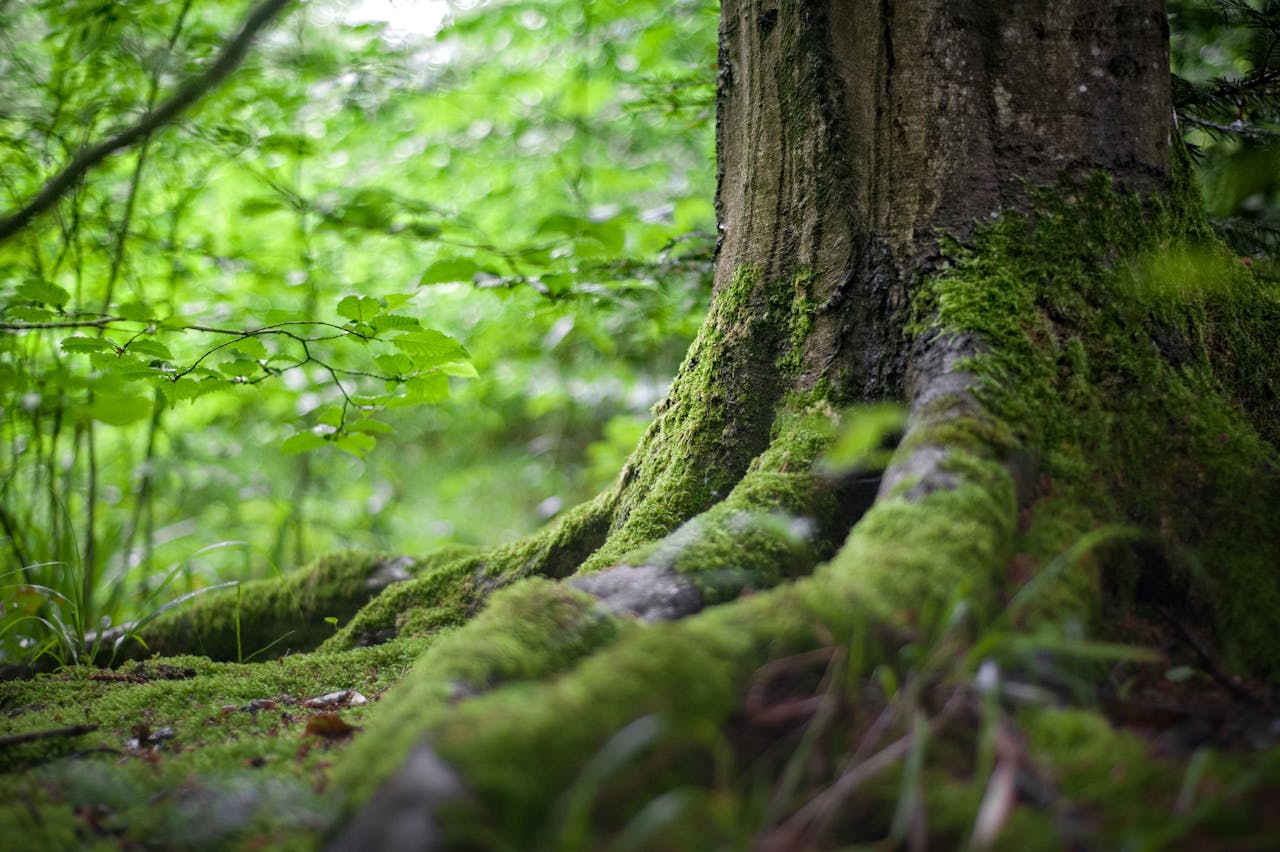
Peter Wohlleben’s work on forests offers a powerful lens here. In his book The Hidden Life of Trees, he describes how trees communicate via underground mycorrhizal networks – fungi that connect root systems and allow trees to exchange nutrients, send warning signals, and support weaker members of the forest.
A forest’s strength lies not in its tallest trees, but in these largely invisible connections.
I’d imagine organisations to be no different.
The most impactful learning systems may not be the most visible ones. They may be found in:
- informal communities of practice
- peer-to-peer problem solving
- reflective conversations after success and failure
- leaders modelling curiosity and vulnerability
- systems that reward sharing, not hoarding, knowledge
I see these as the organisational equivalents of mycorrhizal network – essential for resilience and long-term health.
The polytunnel problem
By contrast, less effective organisational learning reminds me of my dad’s walk-in polytunnel in his garden.
Inside, there are spring onions, radishes, peppers, trays of seedlings – all growing, all productive. On the surface, it looks successful. And in fairness, it is useful. Things grow quickly. Harvests appear.
But each plant lives largely on its own, and no longer than for a year.
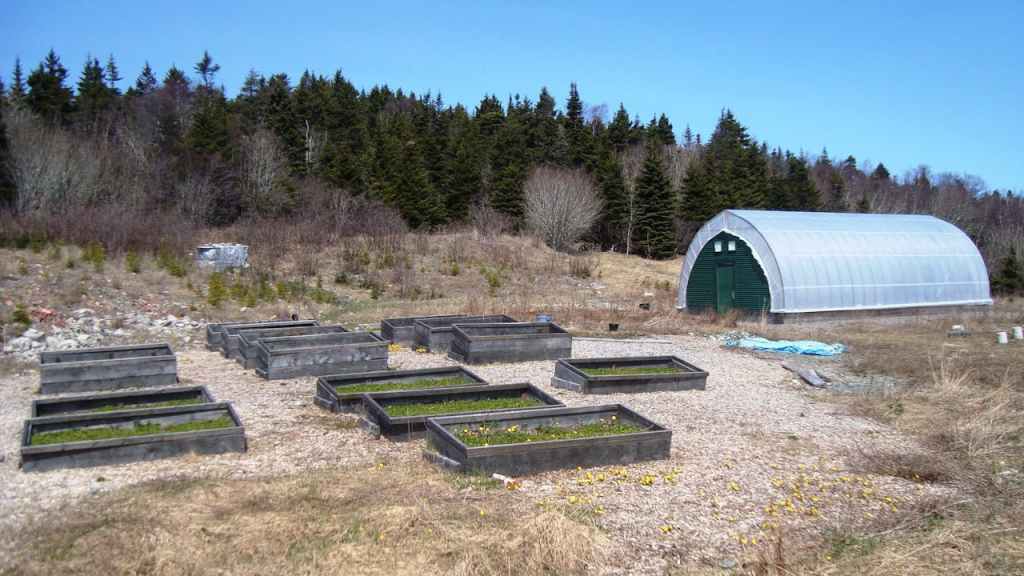
There is no real symbiosis. No mutual strengthening. No shared defence mechanisms. Seedlings come and go, replaced as needed. Growth is managed, controlled, and somewhat dependent on constant human intervention.
This is what learning looks like when it’s reduced to isolated initiatives:
- standalone courses
- short-term skill fixes
- programmes launched in response to the “issue of the year”
- learning that happens to people rather than with them
There are moments when this is exactly what’s needed – a fast response, a targeted intervention, a short-term solution. Polytunnels have their place.
But we shouldn’t mistake them for ecosystems.
From short-term campaigns to cultivation
Nature rarely solves complexity with linear plans. It experiments, adapts, and evolves through relationships over time.
If we want learning that lasts – learning that keeps pace with AI, new skills, and continuous disruption – we would do well to mimic nature not just in its beauty, but in its logic.
Because in the long run, resilient systems don’t rely on catalogues. They grow ecosystems.
Just a thought …
 Gabriella Ferenczi