
Take a deep breath in.
And a big sigh out.
Let me take you along on this adventure.
Our starting point: Quito, the capital of Ecuador.
Our means of travel: a minivan.
With us on the journey:
- Martina, from Germany. The kindest, bravest, most loving travel companion anyone can wish for.
- Estefania, from Quito, Ecuador. Our tour guide and a trusted friend of many indigenous folks in the Sacred Headwaters region of the Ecuadorian Amazon. She regularly guides visitors like us into indigenous territories of the rainforest, on trips organised by the Fundación Pachamama.
The first hurdle: the high mountains of the beautiful Andes. We have to cross its valleys and high mountain passes, drive along the Avenue of the Volcanoes, passing Chimborazo, once believed to be the highest mountain in the world (6263 metres). How lucky we are to spot it in the distance. Most of the time, it is shrouded in clouds.
The journey goes through highlands and lowlands of the Quechua people, following the footsteps of Alexander von Humboldt, the great German geographer, polymath and explorer in the late 18th, early 19th century.

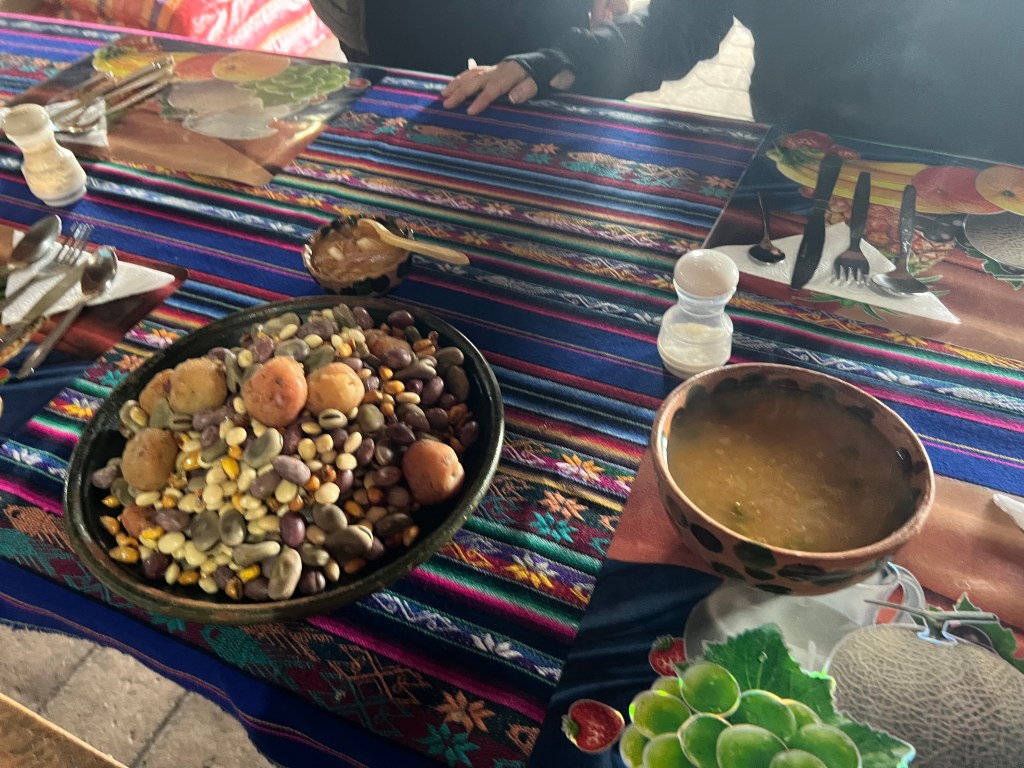
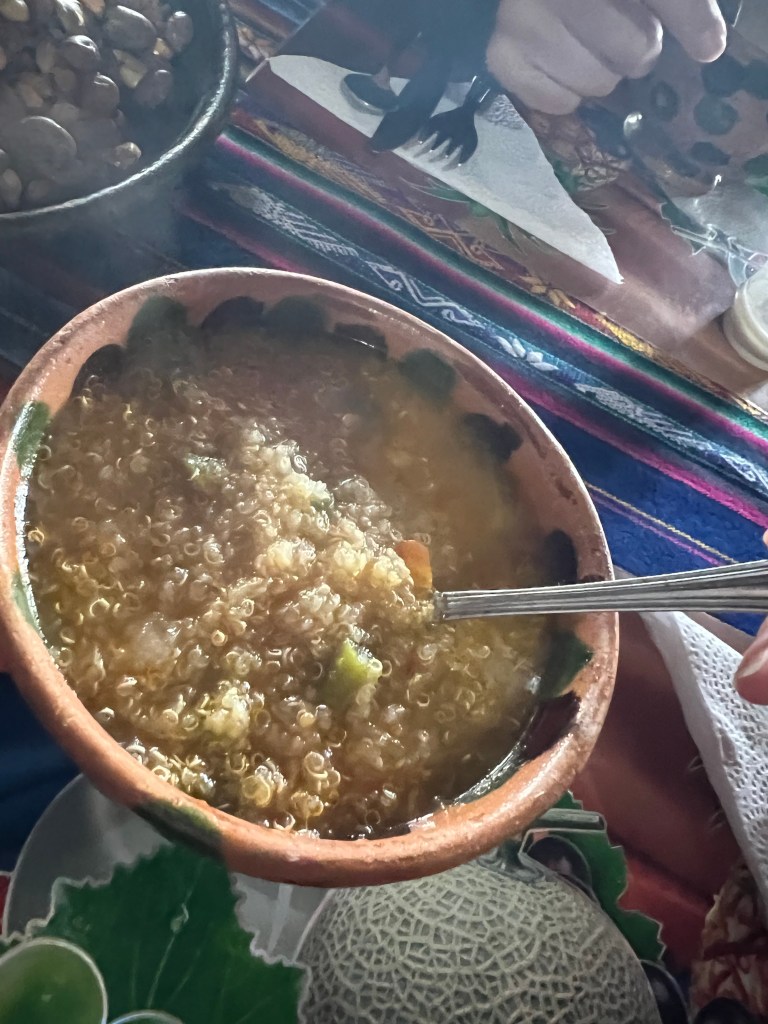
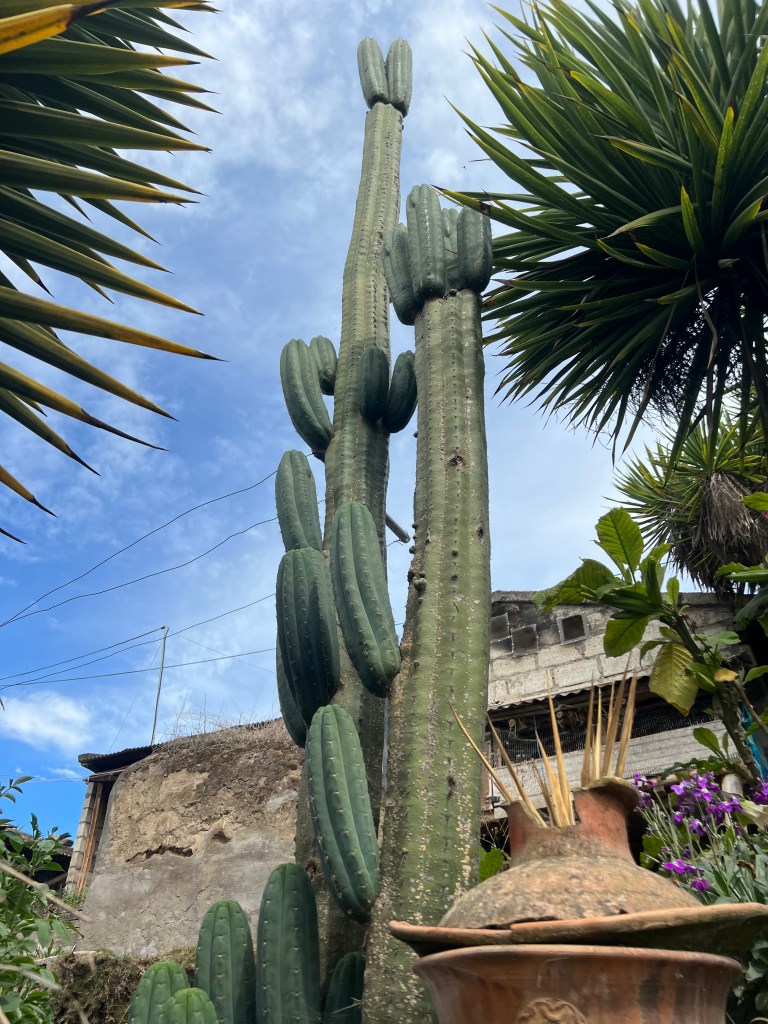
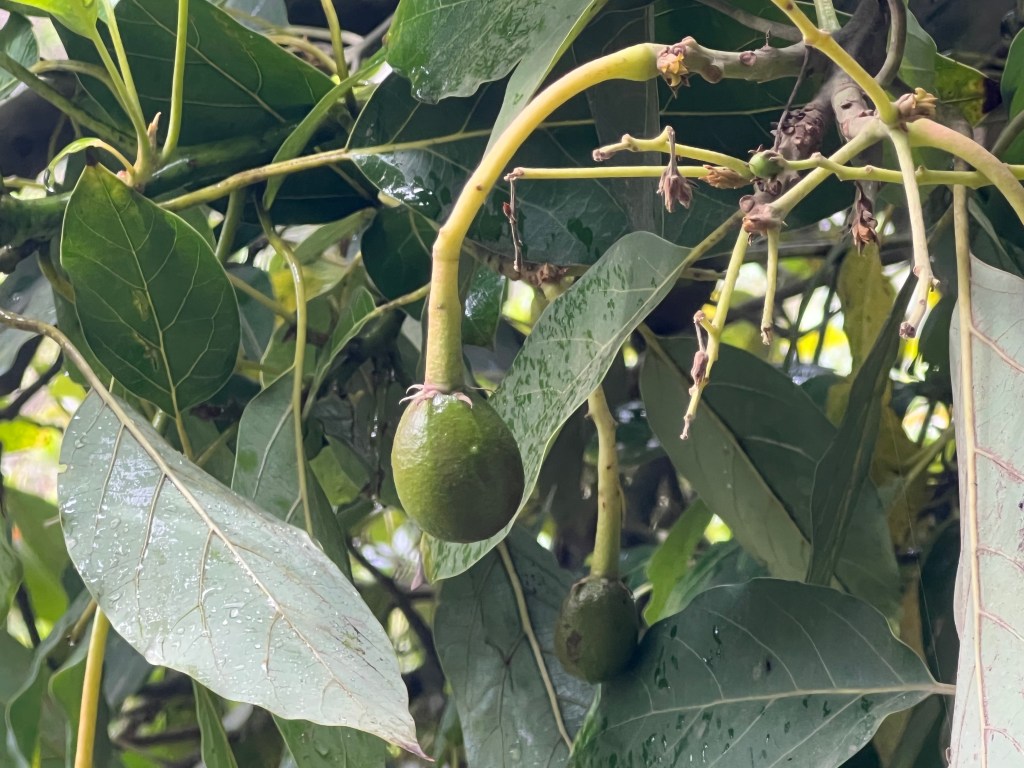
We finally reach the edge of a world that can not be penetrated by car. From this point, there will be no last-minute dash to a corner shop. No “we’ll just pop back.” No easy exit. We are on the edge of the Amazonian jungle, in a small town called …..
……. Shell.
Named after the American oil company. Now, that’s a story for another time. Let’s just say for now: You are unimpressed!
But your small aircraft is waiting.
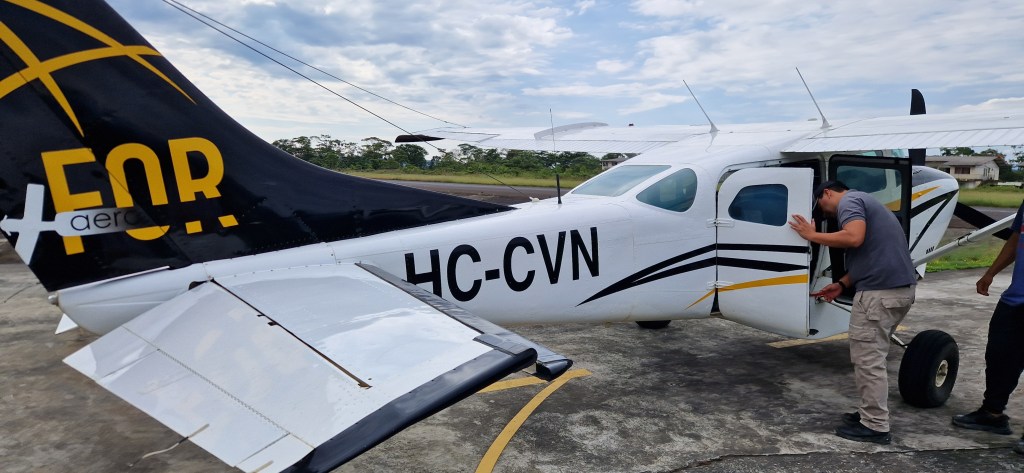
It has no smart systems. It’s loud. It depends entirely on a human being who knows the sky, the weather, the river’s curves, and the temperament of a place that doesn’t bend itself to your plans.
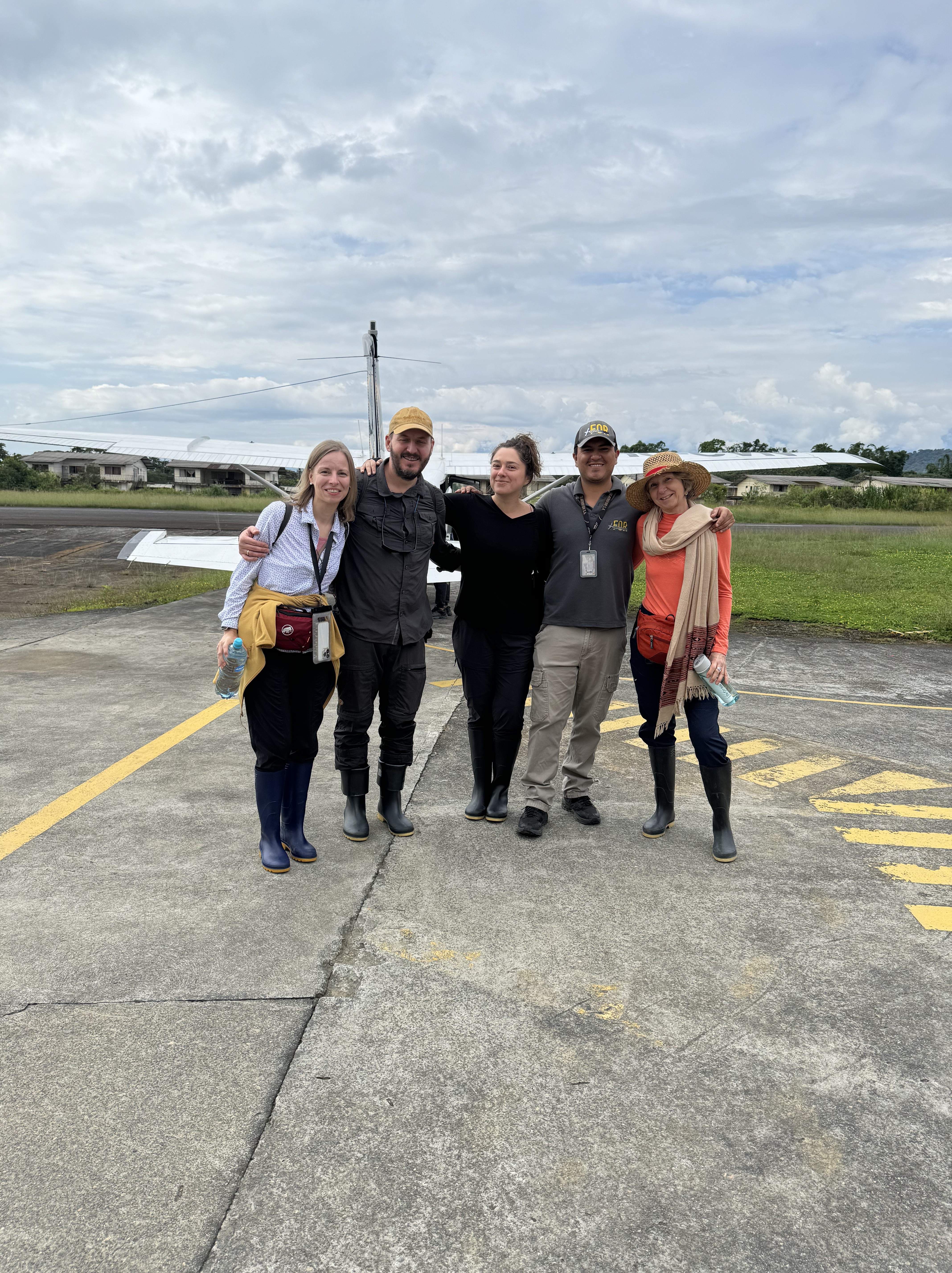
Before you have time to adjust, we’re in the air.
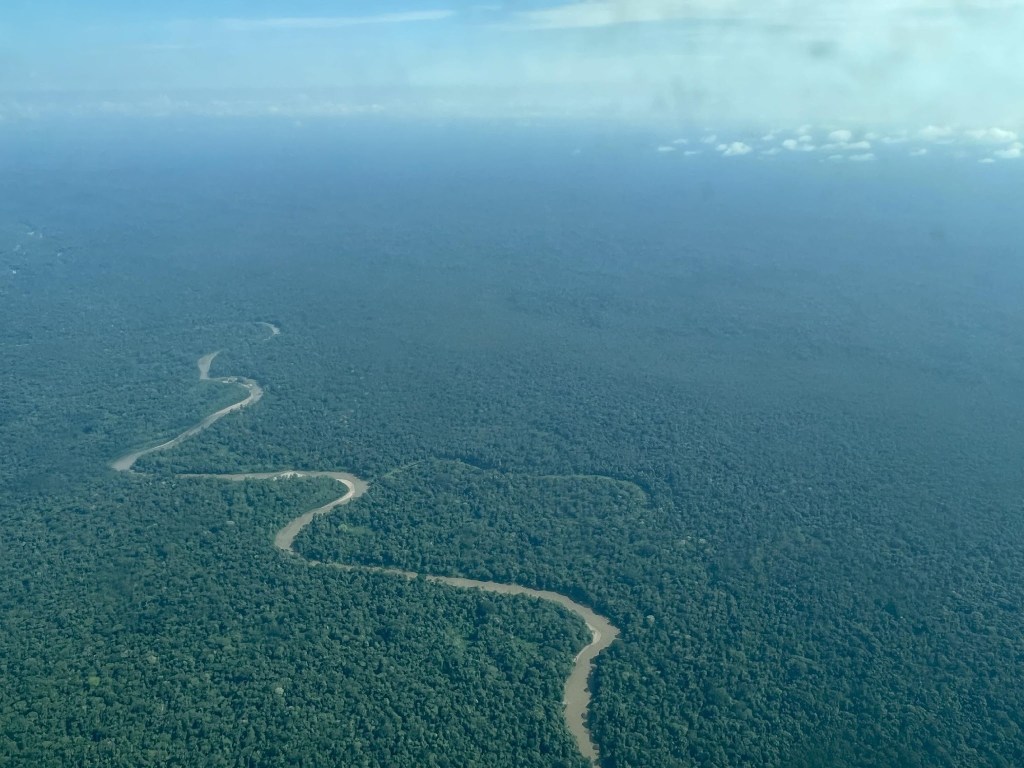
And suddenly, it’s all green.
Not the kind of green you see in a park. Not the polite, curated green of landscaped nature. This is something wilder. Deeper. Ancient. Alive. Rainforest as far as the eye can see, stretching out like a green ocean.
Breathe in, slowly.
The air feels different. Thicker somehow. More generous. As if your lungs have been waiting for this without telling you.
Welcome to the Sacred Headwaters region of the Amazon rainforest in Ecuador – the lungs of the planet, as we like to call it from far away, sitting behind screens and headlines, imagining we understand what that means.
From above, you follow the Pastaza river – a broad, powerful ribbon cutting through the green. It doesn’t look like a tourist attraction. It looks like a guide. A living navigation system, reminding you that there are routes older than roads.
After a good hour in the air, the plane dips, and you see it: a narrow, reddish-brown field strip carved into the forest, the kind of colour of a tennis court.
A landing strip, flanked by a village.
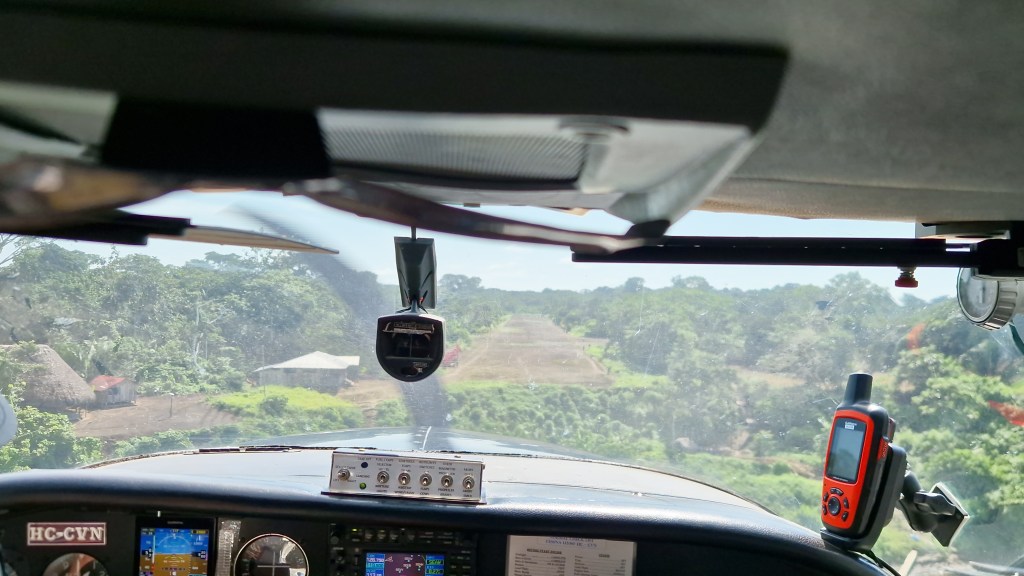
This is Sharamentsa, home to around a hundred men, women, and children of the Achuar tribe.
As the wheels touch ground, you know that you’ve arrived, and there’s no way back.
As you step out of the aircraft, the heat and humidity wraps itself around you like a blanket you didn’t ask for.
You scan the scene and see your host approaching.
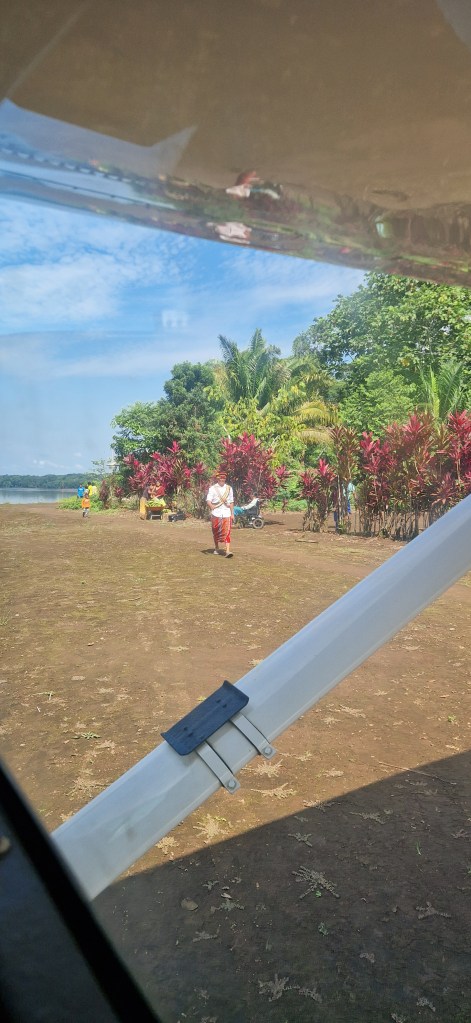
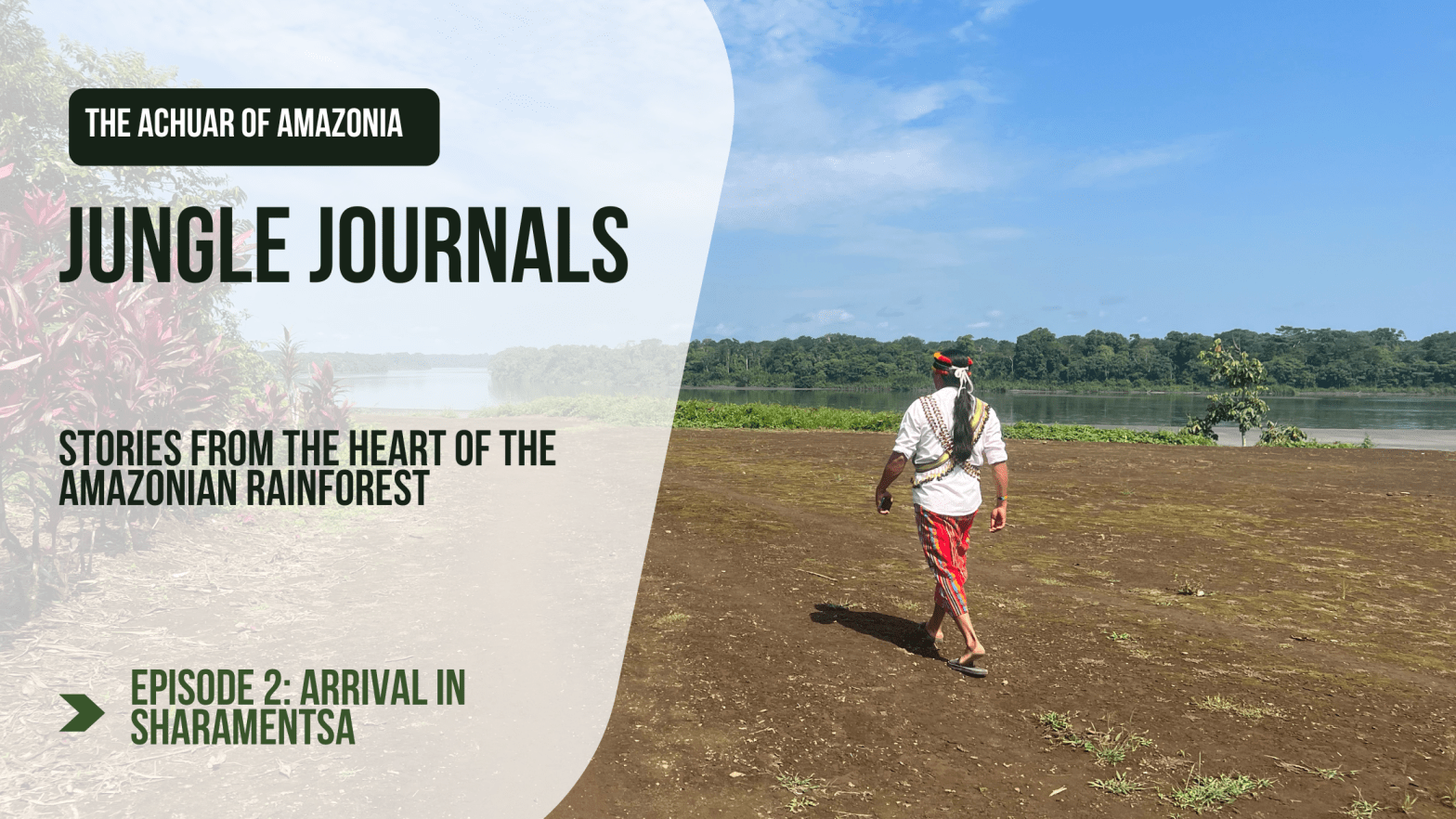
He speaks Spanish, and introduces himself as Edwin – Achuar name: Sukut.
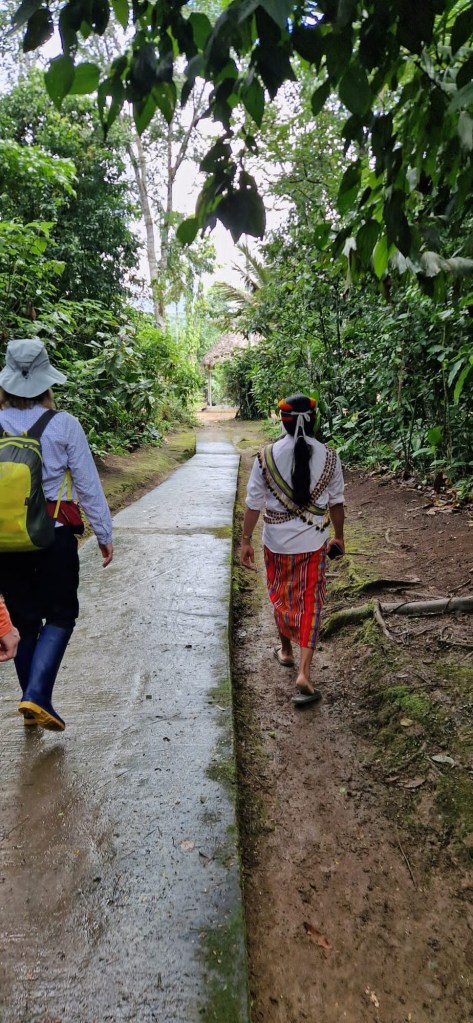
He’s wearing a long red skirt, a white traditional shirt, and an elaborate headpiece of feathers: black, red, yellow – and a vivid electric blue that makes you pause, because your mind insists that colour can’t be real. As if nature has exceeded the range of what you’ve been trained to expect.
Around his neck hangs a long necklace made from plant seeds, intricate and proud.
His hair is long and glossy black.
And his smile… it stays with you.
You would love to take a close-up photo of him, but it just feels disrespectful, and you resist the urge.
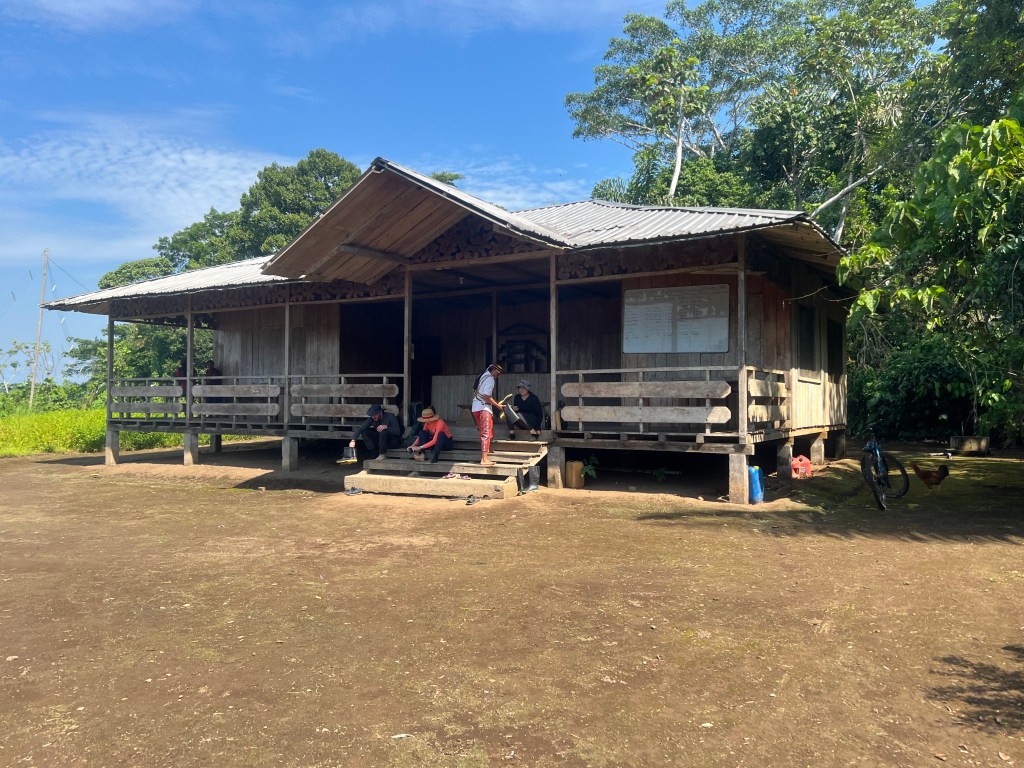
Sukut leads you to what they call the “restaurant.”
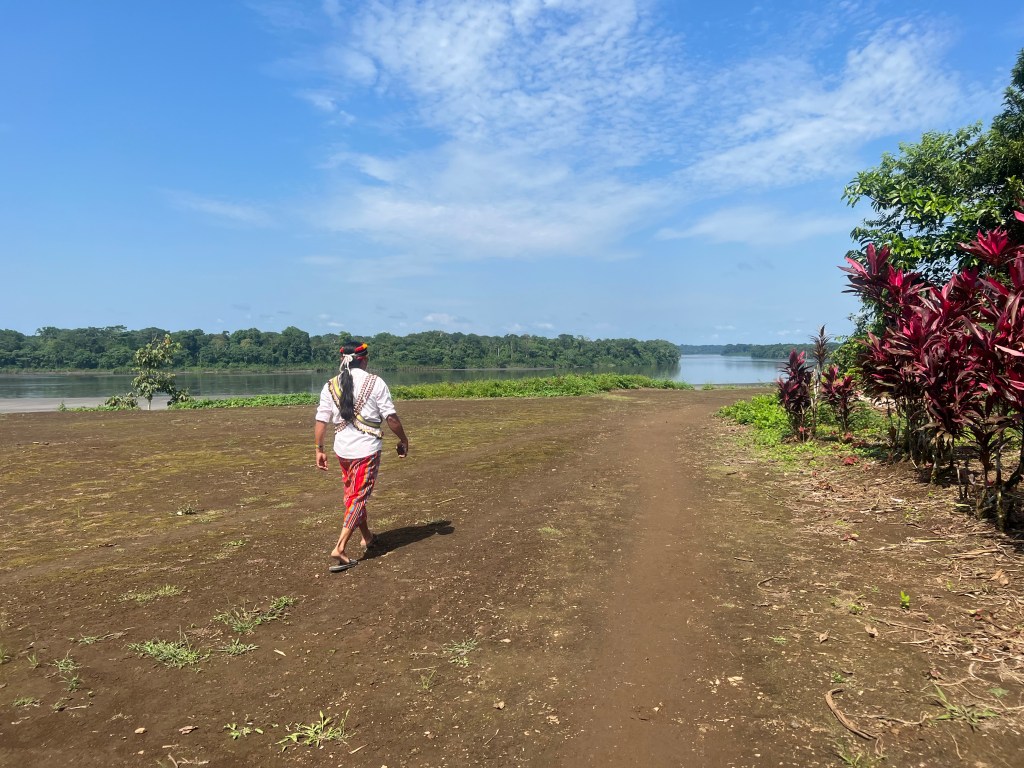
It’s a thatched hut with a large wooden table and sturdy wooden stools – the simplest architecture.
This is where Sukut and his brother Oswaldo – Achuar name Tee, welcome you officially into their community.
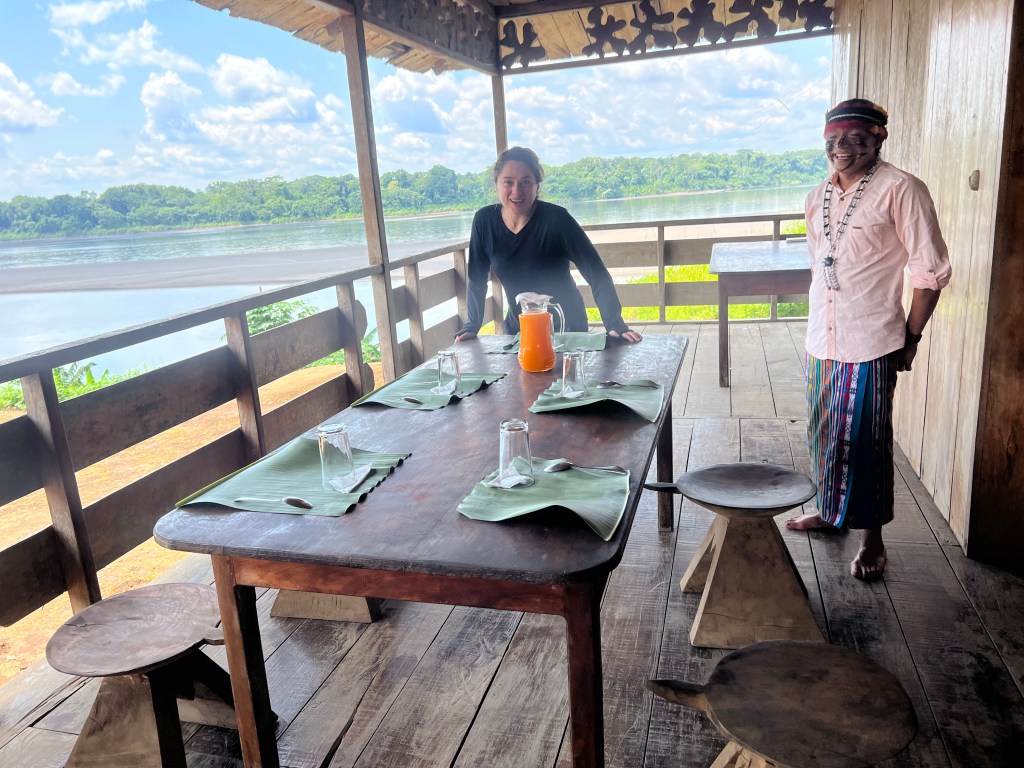
Fresh papaya appears. Yucca. The kind of hospitality that isn’t polished, isn’t trying to impress, and somehow that makes it feel even more welcoming. As if what you’re being offered isn’t just food, but a signal: you are safe here, don’t worry, we’ll take care of you, welcome to our world.
The “restaurant” overlooks the Pastaza river. The same river you traced from the sky. The same river that guided your pilot to this place.
The nearest town is said to be a ten-day walk away through thick jungle.
Ten. Days.
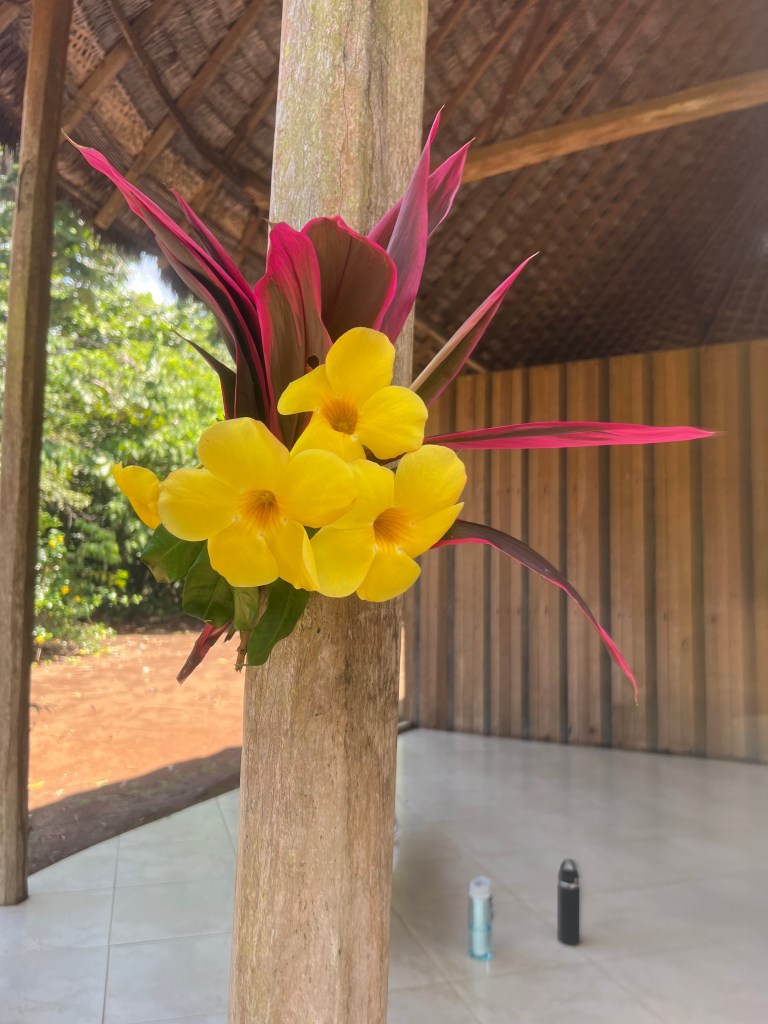
Sukut takes us to our accommodation: a humble thatched cabin decorated with beautiful flowers by the Achuar ladies Marisa and Maira. Clean. Tidy. Simple.
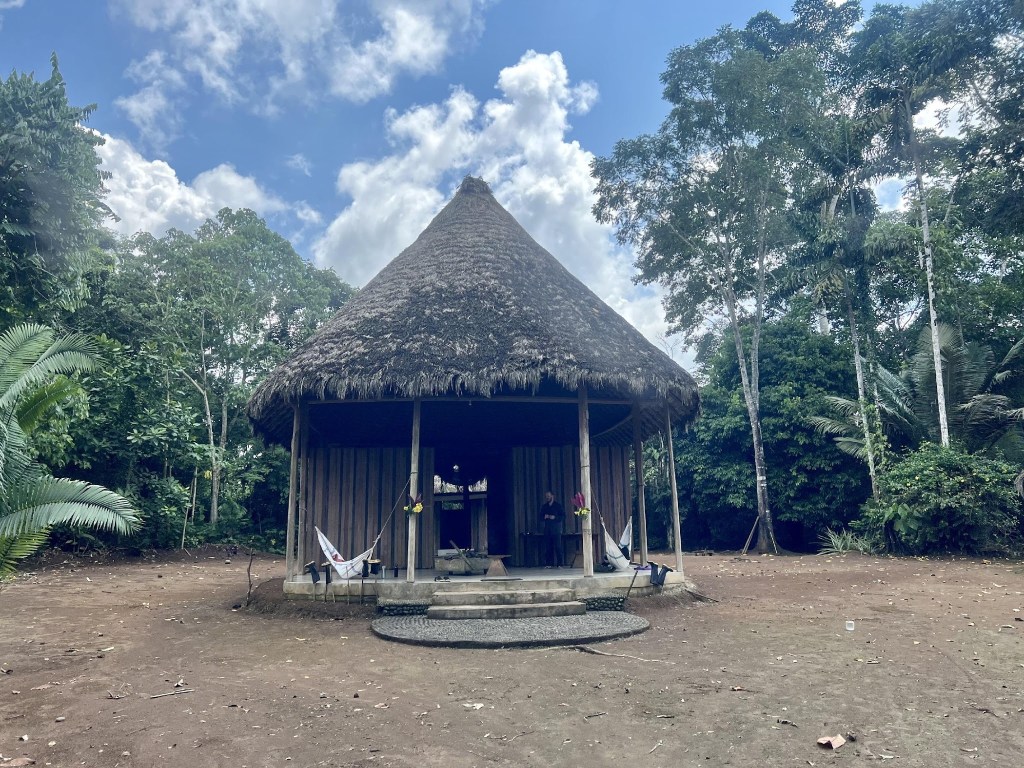
The cabin is quiet in the way only very alive places are quiet.
Not silent. Never silent.
In this cabin, you can hear every hiss, every buzz, every chirp and trill, every rustle and hoot and howl and whisper of the rainforest – day and night. The jungle doesn’t wait until morning to begin. And it doesn’t pause while you sleep. It’s all around you, buzzing and alive.
Your cabin has wooden walls but has an open ceiling. Your bed is covered in mosquito netting. Even the ceiling has netting, and the floor tiles are far away from the authentic living conditions of our hosts – a kind of jungle luxury reserved for visitors only. You take it as a small concession to the nervous system of someone who isn’t used to sharing space with what crawls and flutters.
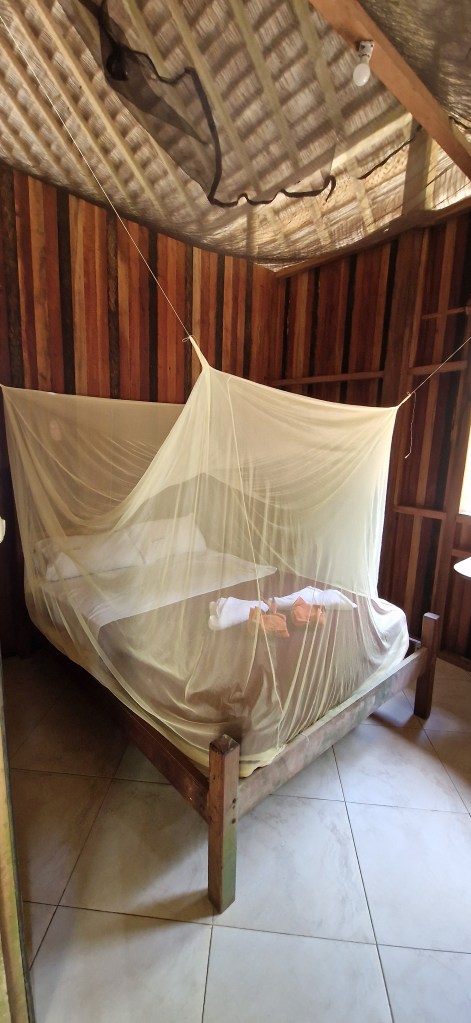
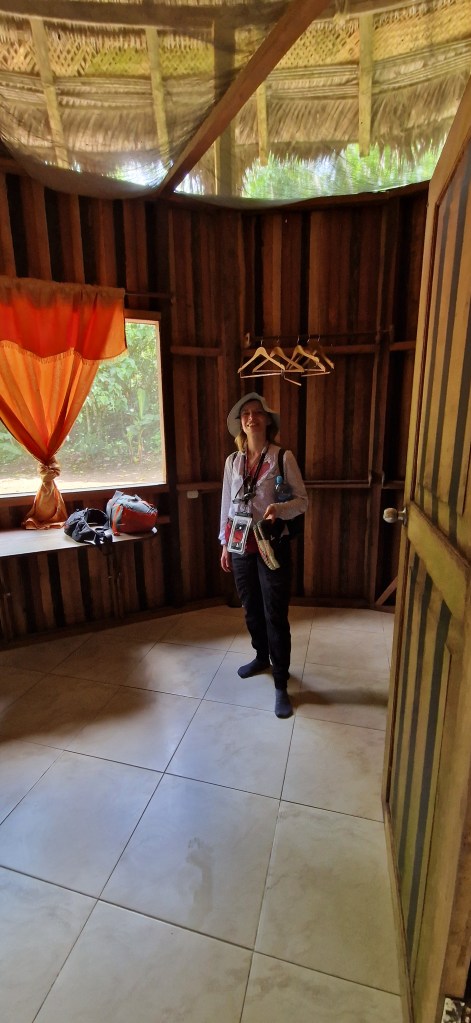
The Achuar, a warrior tribe, don’t need mosquito nets. And they certainly don’t need floor tiles.
They sleep right under the thatch, with earth beneath their feet, in comfort with nature, including jaguars, spiders, mosquitoes, frogs… and, on the more poetic end of the spectrum, the biggest and most beautiful butterflies you’ve ever seen.
You look at your phone, out of habit.
No signal.
Wifi? Don’t even think about it.
There is nothing to scroll. No updates. No ambient noise from the world you came from.
In a place like this, the familiar falls away quickly. And when it falls away, something else begins.
You notice your senses sharpening, as if they’ve been waiting to be invited back into the room.
You notice your mind trying to categorise everything – and failing.
You notice your body recalibrating to the rhythm of a world that does not organise itself around human convenience. As Estefania, our guide put it:
Once we are in the jungle, we are on jungle time.
This is one of the most biologically diverse places on Earth where the weather can change very rapidly.
Remote doesn’t even feel like the right word. Because it isn’t remote for the Achuar – it’s their home. It’s the centre of their lives. It’s their history. Their memory.
You learn that the forest is their supermarket, pharmacy, hardware store… and even their cathedral.
Everything they need exists here, in abundance.
Not abundance as in endless consumption, but abundance as in enoughness: enough food, enough medicine, enough materials, enough meaning.
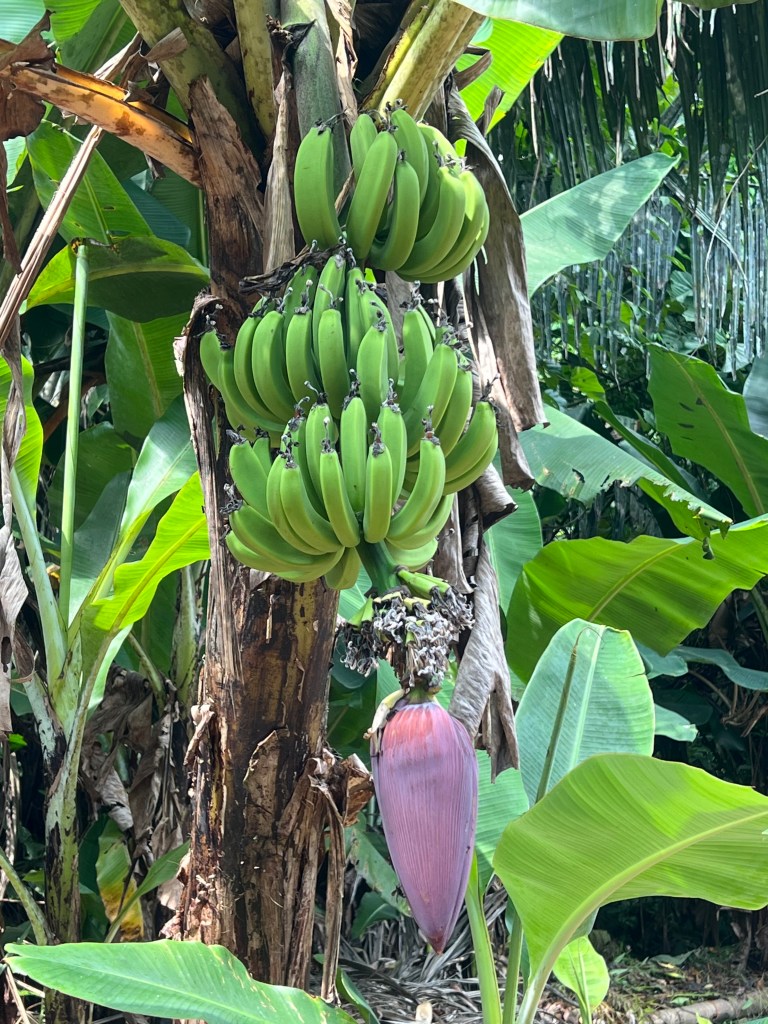
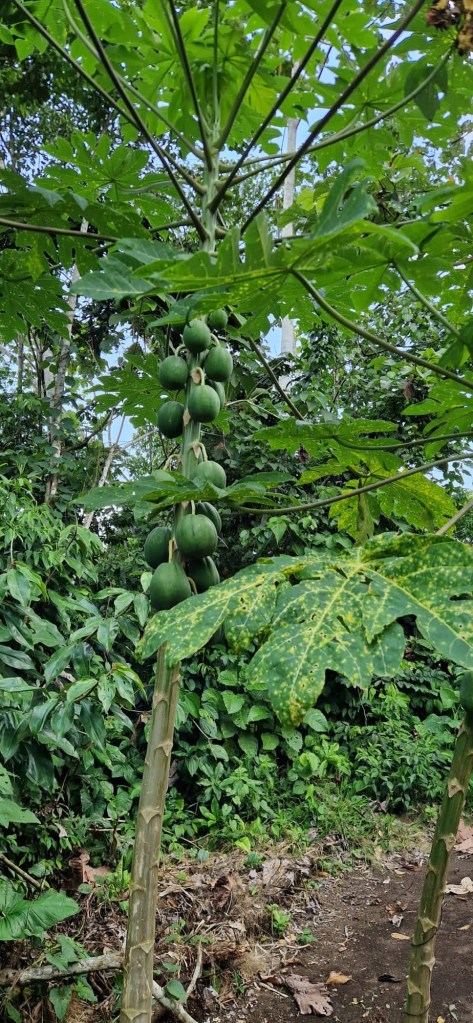
Village shamans still serve as healers, harnessing the forest’s potency for all kinds of ailments: headaches, fevers, insect bites, parasites, aches, and ulcers.
The forest has remedies you can’t pronounce. Plants you’ve never heard of. Solutions that don’t come in packaging.
And as you sit there, still adjusting to the heat, the humidity, the sounds, the netting, the absence of signal, you realise you’ve arrived in a place where modern certainty has very little authority.
And you, inevitably, begin to change and adjust.
Your inner world becomes slightly quieter, while what surrounds you becomes impossibly vivid.
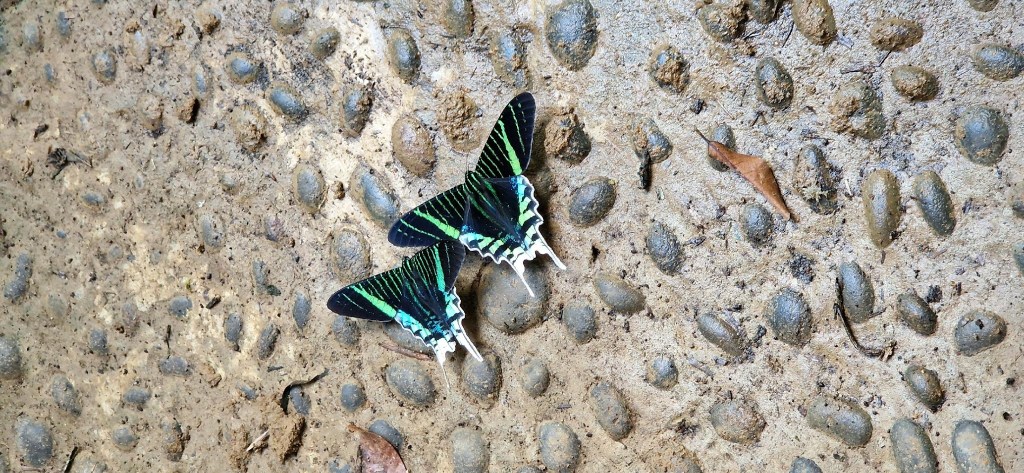
You haven’t even stepped into the forest yet – the forest that surrounds the village. But something has already started to shift upon your arrival in Sharamentsa.
And as the day begins to soften, Sukut approaches you with an invitation:
An afternoon boot trip to the playa.
Let’s take a deep breath in. And a deep breath out. And a short pause, for now, before vamos a la playa.
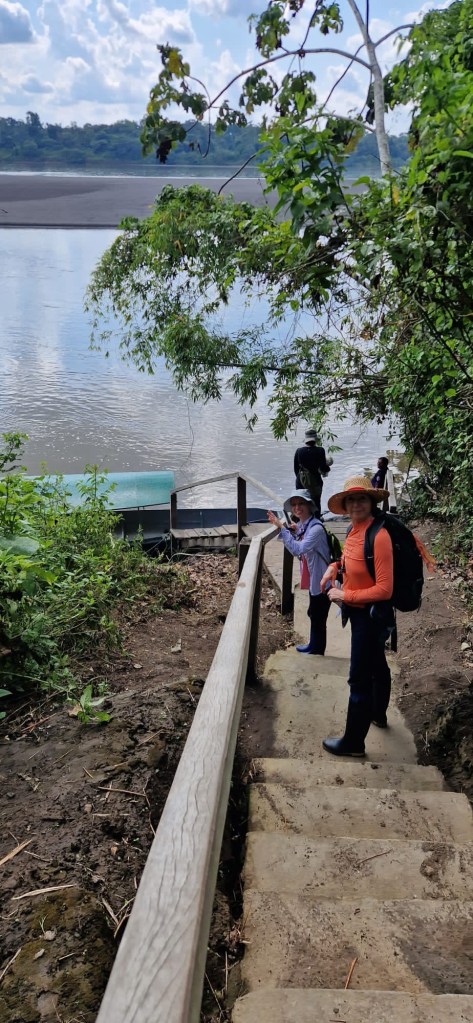
In episode 3, Sukut will take us on a boat trip along the Pastaza River to tell more about his family’s story. We’ll take a dip in the river, have our first night in the jungle, and the next day, we’ll take a long walk deep into the forest — to visit the sacred Menté tree. Slowly, we will begin to really understand what the Achuar mean when they talk about the spirit of the rainforest being alive.
For a closing thought, though, I’d like to leave here a quote from Rainer Maria Rilke that our travel companion Martina shared with us one day during the trip:
You must give birth to your images. They are the future waiting to be born. Fear not the strangeness you feel. The future must enter you long before it happens. Just wait for the birth, the hour of the new clarity.”
– Rainer Maria Rilke
Maketé for reading, Maketé for being here with me. Until next time.
Love,
Gabriella
[Maketé is ‘thank you’ in the language of the Achuar.]
 Gabriella Ferenczi