
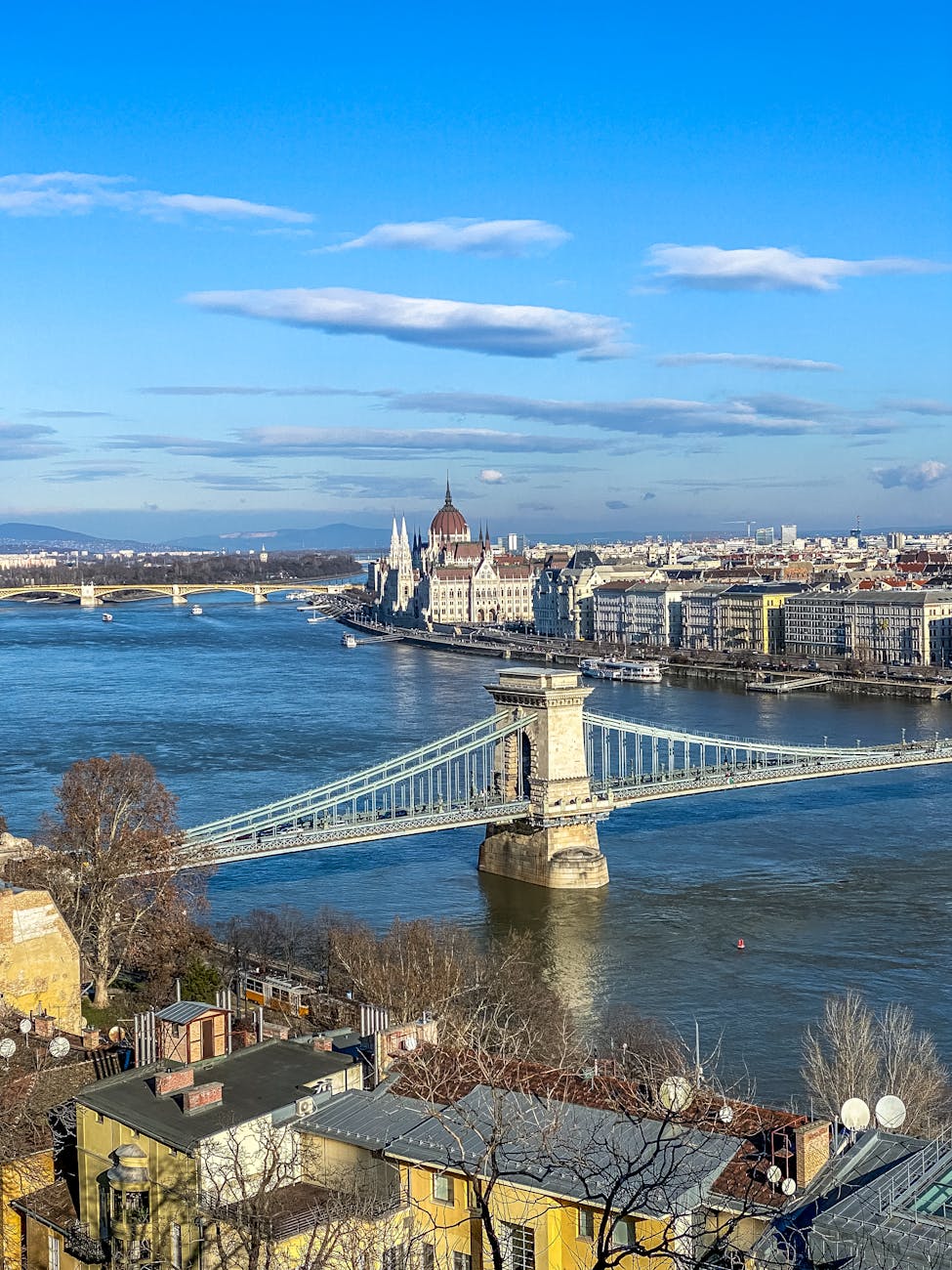
The 16-year Orbán era is officially over. And I mean – OVER.
As the reality starts to sink in, Hungarians are facing something rare: an opportunity, and a responsibility, to close a chapter with dignity and begin healing.
In this 4-part series, I’m reflecting on how I saw what just happened. I’m looking at it from a marketing and communications perspective, and as a linguist, trying to decode what enabled Orbán to stay in power for so long. In the final post, I’ll turn to the question of restitution. That’s a difficult conversation, and one that inevitably brings up uncomfortable historical parallels.
Part 1: What just happened in Hungary (you are here)
Part 2: Two realities: Political marketing in parallel worlds
Part 3: When language becomes a weapon
Part 4: The banality of silence
London, 12th April
The polling station in London was in a hotel in Hammersmith. That’s where Hungarian expats could cast their votes. It was all well-organised, and everything went smoothly.
On the way there from the station, it felt like little Hungary. Everyone on the street spoke Hungarian, as if this little corner of the world had suddenly gathered us all in one place.
We cast our vote and went back home.
And then we watched the news. Constantly. Refreshing the browser, switching channels, checking updates.
I was very anxious. Yes, about the result itself, but also about what could go wrong along the way.
Civil movements had set up initiatives to deter vote-buying. You could follow what they were seeing, the kinds of discrepancies they were reporting.
And there were many.
I was afraid of unrest. I was very afraid of a close result that could have pushed Hungary into something far more fragile, something resembling a civil-war-like situation.
Stepping back
I’m not going to go into the full political context here. Others have done that well, such as the Telegraph and the BBC:
What I’m more interested in is exploring how two entirely different realities could exist, side by side, for so long.
In the months, weeks and days leading up to the election, we were holding on to the last remaining independent news outlets: Partizán, 444, 24.hu, Telex, Válasz Online. I also followed Péter Magyar’s Youtube and social media directly. Long-form content, unedited conversations, hours of material. I wanted to hear things from the horse’s mouth as much as possible, not through a filtered selection.
At the same time, I occasionally stepped into pro-government media spaces, and listened to Fidesz-supporting voices.
It was, at times, unbearable.
Not only because of disagreement, but because it felt like stepping into a completely different reality.
Two worlds. Two mathematical sets that do not intersect.
And people settled into these worlds, two echo chambers, often without even realising it.
Where I stand
I consider myself a citizen of the world. Open-minded. Yes, liberal, but that doesn’t mean I don’t see the values of conservatism. I do. Just as I can also see the values of the left.
I believe these perspectives can coexist. That they are not meant to be enemies.
Do I see this perfectly represented by Péter Magyar? Not fully.
But this moment was never about perfection. It was about change. And that, to me, was and is a compromise I’m very willing to take.
When the numbers started coming in
We were watching Telex and Partizán’s live YouTube channels.
The very first numbers, at a very low level of processed votes, were not promising. But the analysts explained that these usually come from small villages and rural areas, where we know Viktor Orbán’s party usually leads.
That part wasn’t surprising.
What I was not expecting was how quickly a different picture started to emerge.
TISZA leading. And not just narrowly – decisively.
Péter Magyar’s TISZA party needed a two-thirds majority. 133 seats out of 199 in the parliament. That was the threshold for dismantling the Orbán system and restoring checks and balances more easily.
So we were crossing our fingers.
Lucky charms
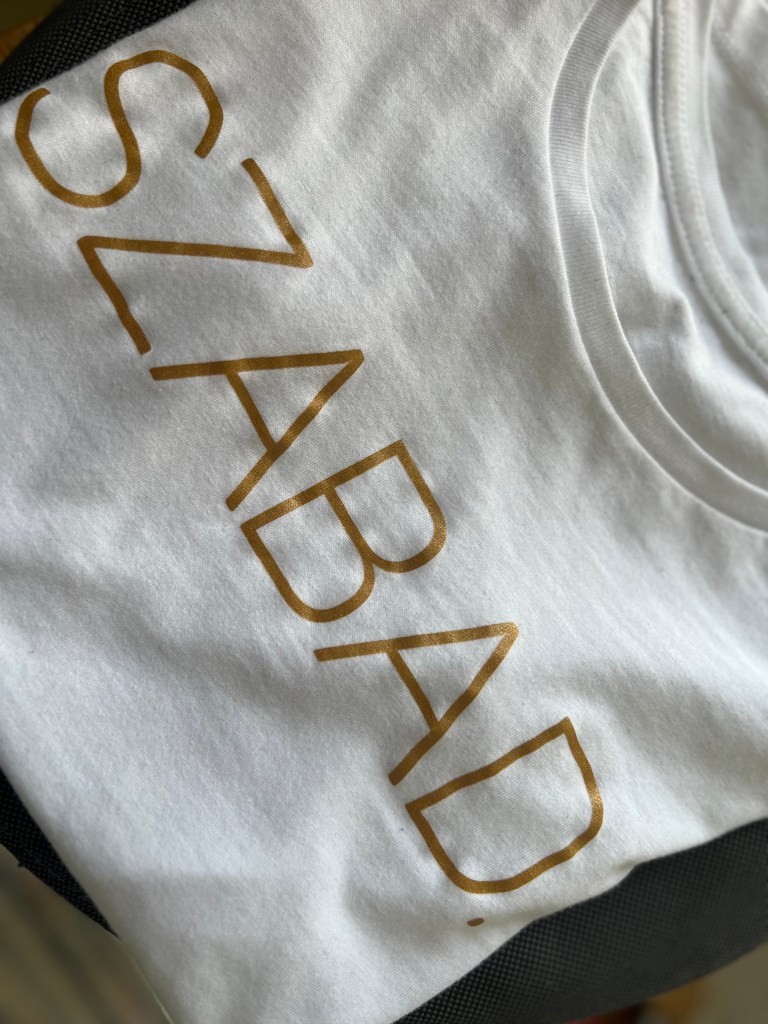
A SZABAD T-shirt.
Supporting a civil society organisation called Civil Liberties Union (TASZ) that provides free legal services to thousands of people, including victims of the Orbán regime.
Szabad (pronounce: sah-bud) means free.
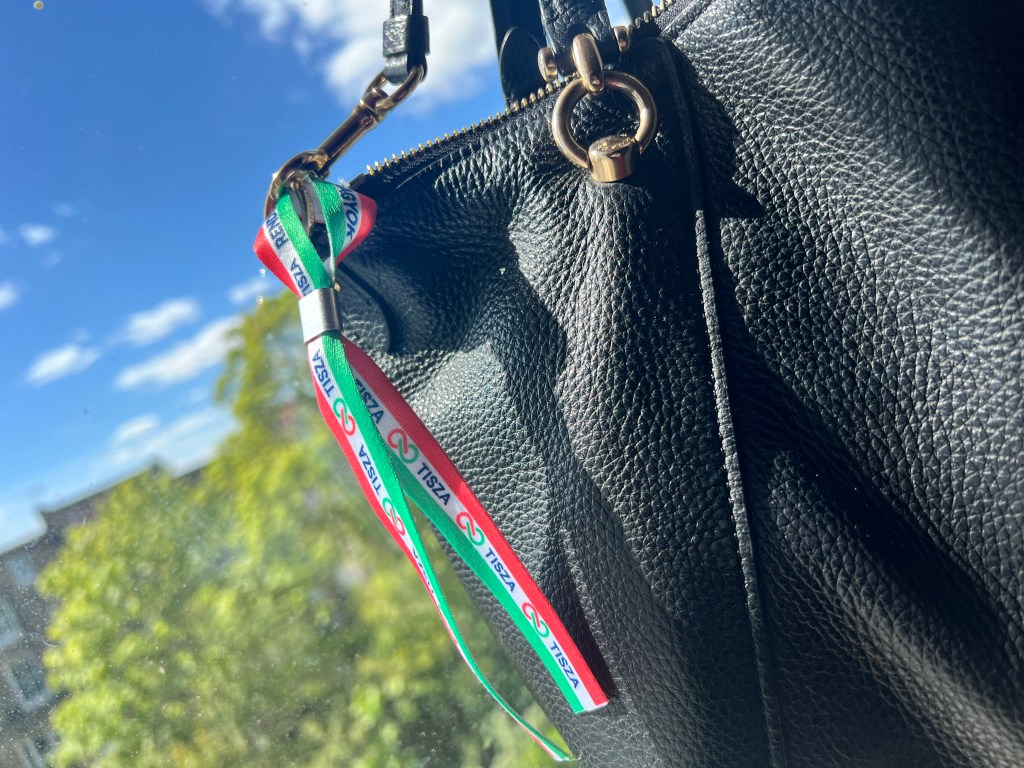
A TISZA armband, with the Hungarian tricolour, saying “I’m a regime changer.”
Received it from Márk Radnai, vice president of TISZA and the local MP of the electoral district I’m from.
TISZA is an acronym for Tisztelet és Szabadság Párt (Respect and Freedom Party). The name also evokes the Tisza river, second largest river in Hungary, with the party slogan “Árad a Tisza!” (The Tisza is flooding!) referencing its growth and influence. Tisza also mimics the name of István Tisza, an early 20th-century Hungarian Prime Minister.
A necklace from Quito, Ecuador. A small tourmaline pendant for protection.
(It worked in the rainforest. We trusted it to work here, too.)
And then, very quickly, it became clear:
138 seats.
With the potential for more after letter votes and votes such as ours that were placed abroad have all been counted.
[Update as of 19th April 2026 when final results have been confirmed: TISZA has 141 seats, FIDESZ 52, Our Homeland 6.]
The moment
I told my husband earlier that day I wouldn’t drink anything celebratory until the result was definite. I thought that would take hours. Maybe the whole night.
Well, it didn’t.
Viktor Orbán accepting defeat at around 30% of votes being processed was… unbelievable.
We were both crying.
Not just because of the result, but because of what it meant. For years behind us, and for generations ahead.
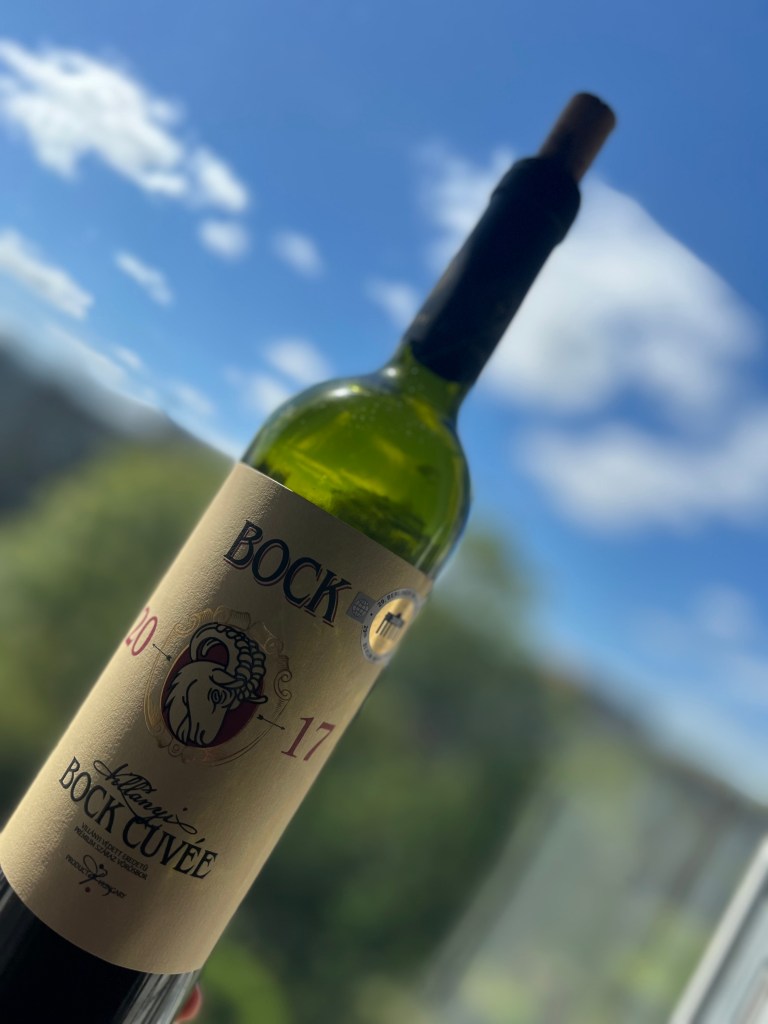
We opened a bottle of the award-winning 2017 Bock Cuvee from the Villány wine region in southern Hungary. Wine never tasted that good.
The night
We went to bed in the early hours of the new Hungary, but sleep didn’t really come. I woke up many times during the night and checked the news again and again.
Not out of curiosity, but to make sure this wasn’t a dream.
To make sure something hadn’t happened in the meantime that would question the result.
But no.
It was real.
Very real.
What an abusive system does to you
Feelings were running through us in waves. Ecstatic euphoria, and at the same time, disbelief.
It’s difficult to explain what a system built on manipulation does to you.
It makes you question your sanity.
Question yourself.
Doubt reality.
That, to me, is the real sin of the Orbán regime.
No wonder people speak about trauma. About something that resembles post-traumatic stress. Because it does feel like that.
It feels as if an entire nation was gaslighted. As if we are collectively coming out of an abusive relationship, leaving behind an abuser.
And that instinct, to double-check reality, is not the same as being critical. It’s something else. It’s what happens when you are conditioned to believe that anything can be taken away, at any moment, by an arbitrary system.
A country waking up
The following day, life continued.
Those who voted for change were elated, but also exhausted. Almost disoriented.
Those who voted for Viktor Orbán are now facing something else entirely: Shock. Grief. Disbelief.
For four days, there was silence. Orbán didn’t say a word to his voters. And when he finally did on Thursday, there was no real consolation.
He spoke about needing time. About emptiness. About reflection, reorganisation, starting again from the ground up.
This first “interview” he gave didn’t quite feel like an interview.
The questions were not neutral. They were careful, they were protective. Framed in a way that softened the moment. And that, too, says something about the man himself. Because that’s not what a normal interview is supposed to be.
Happy New Hungary!
Looking back, what stays with me most is not just the result.
It’s that moment in the middle of the night, waking up, checking the news, not quite believing it.
As if reality needed confirmation. As if it might disappear if left unattended.
And perhaps that is the clearest reflection of what the past 16 years have done to us. Not just shaping how we vote. But shaping what we believe is even possible.
And that’s a scary thought.
It’s a new day, a new dawn, a new life for Hungarians – and boy, it feels so good! Cheers to a future that brings back public trust, dignity, and a sense of reality we no longer have to question.
Other posts in the series:

The red line: advertising, propaganda, and moral responsibility
Where is the line between political communication and psychological manipulation? This post explores the role of Hungary’s advertising industry during the Orbán era, examining propaganda, fear-based campaigns, public money, and the ethical responsibility of creatives and agencies.
Keep reading
The banality of silence | What just happened in Hungary
How did silence become part of the system? This post explores media control, quiet complicity, and the difficult questions Hungary now faces as people begin to speak.
Keep reading
When language becomes weapon | What just happened in Hungary
How language shaped political reality in Hungary, from labels and slogans to humour and wordplay, and how words became tools of division, resistance, and meaning in the final years of the Orbán era.
Keep reading


3 comments